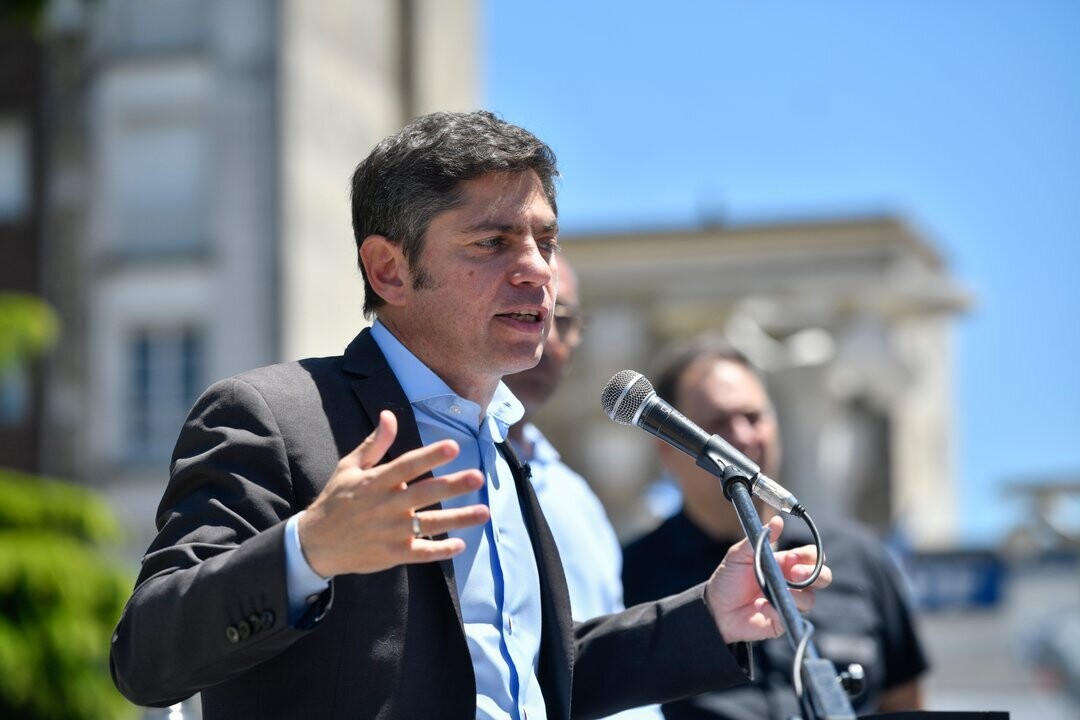
A survey by the consulting firm Trends positions the governor of Buenos Aires, Axel Kicillof, as the main opposition leader in Argentina, with a wide lead over other political figures. Although the presidential elections are not until next year, hundreds of polls will be published until 2027, according to surveys conducted by the Argentine News Agency. According to the study, Kicillof reaches 40% of preferences, well above former President Cristina Kirchner, who is in second place with 23%. They are the only two leaders to achieve double-digit support. Further back are Mauricio Macri with 6% and Juan Grabois with 5%, while the rest of the measured names do not exceed 2%. The complete ranking. The Trends report shows the following order among the main leaders: Axel Kicillof: 40%, Cristina Kirchner: 23%, Mauricio Macri: 6%, Juan Grabois: 5%, Sergio Massa: 2%, Guillermo Moreno: 1%, Ofelia Fernández: 1%, Máximo Kirchner: 1%, Horacio Rodríguez Larreta: 1%, Pedro Rosemblat: 1%, Martín Lousteau: 1%, Miguel Ángel Pichetto: 1%, None: 14%, Others: 3%. A fragmented scenario. One of the relevant data points from the study is that 14% of respondents do not identify any leader as an opposition reference, which reflects a significant level of dispersion and lack of representation in that space. In turn, the difference between first and second place marks a clear centrality of Kicillof within the opposition universe, in a context where the rest of the figures appear with considerably lower levels of support. Technical sheet. The survey was conducted on 2,000 cases nationwide between March 29 and 31, with a margin of error of +/- 2.2%. The results offer a snapshot of the current political scenario, with consolidated opposition leadership in the figure of the governor of Buenos Aires and an opposition that still shows signs of fragmentation.